
Shelving Units vs Racking Systems: Best for Storage
Trying to decide whether shelf systems or rack systems will save space, time, and money in your Singapore facility?
Use this guide to determine between shelving and racking for your operations. Shelving units suit manual picking, low-weight loads, and regular access. By contrast, racking systems are intended for palletised, heavy loads transported by forklifts. They are stacked higher to maximise vertical space.
Consider capacity and footprint: shelving units typically support up to 2,000 lbs per shelf in industrial-grade formats. They’re usually < 30 inches deep. Racking systems, by comparison, accommodate pallet loads of 1,000+ lbs and deeper-set layouts. They https://www.ntlstorage.com/used-racking-systems-vs-new-purchase-complete-guide/ include floor-anchored uprights and beams for safe, high-density storage.
The selection influences workflow, equipment needs, costs, and regulatory or sanitation rules in Singapore. Shelving units usually cost between $100–500 each. Racking often ranges $300–$1,500+ per bay and may require installers. Use this guide to match rack or shelf solutions to your inventory and available space.
Key Takeaways
- Shelving fits light loads, fast picks, and compact footprints.
- Use racking for pallets, heavier weights, and vertical density.
- Weight, depth, and access style drive the shelving-vs-racking decision.
- Budget note: shelving is cheaper upfront; racking often requires extra gear and install.
- Singapore specifics—vertical height, hygiene, and compliance—matter.
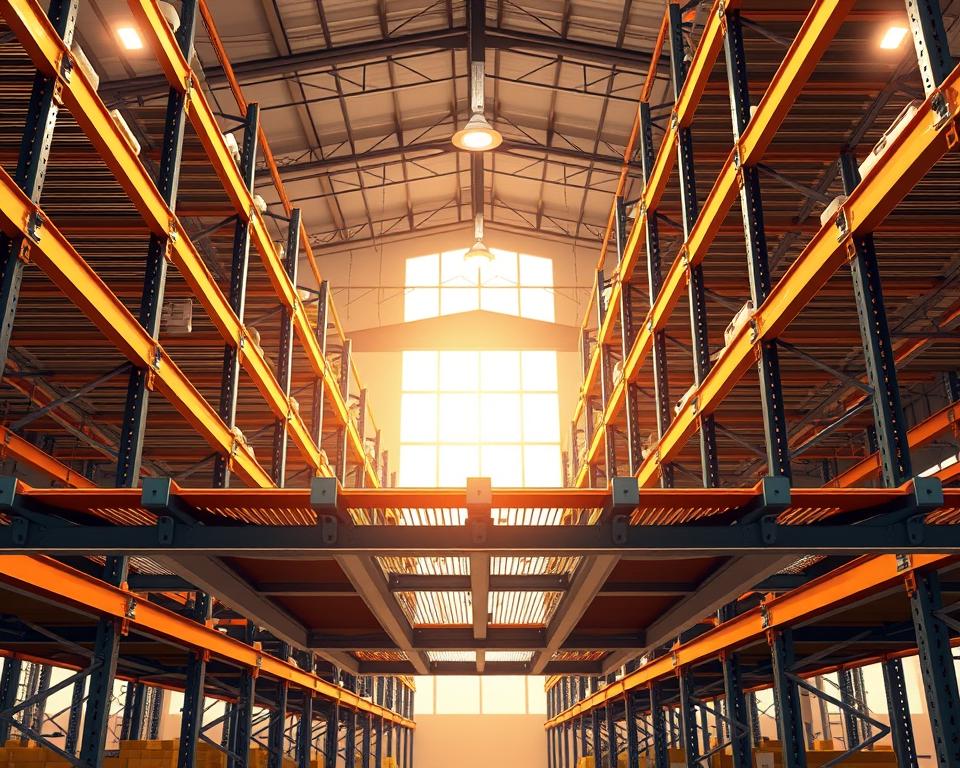
Shelving vs Racking
Choosing between shelving and racking has a big impact on space efficiency. This section highlights the main differences and their implications for your operations in Singapore.
Primary functional differences
Shelving units are designed for picking individual items and small cartons. They support lighter loads and provide easy access for frequent picking. With wire or solid decks and <30-inch depths, they fit manual processes.
Racking is for pallet loads accessed by powered equipment. They have deeper storage, often exceeding 30 inches, and require floor anchoring. Beams transfer load to uprights, so decking and ratings are critical for safety.
Capacities differ widely. Industrial shelving reaches ~2,000 lbs per shelf. In contrast, racking systems can support 1,000+ lbs per pallet and for multi-pallet stacks. Mesh decks carry thousands; solid/perforated decks may support higher.
Why the choice matters for your operations
Space utilization is a critical factor. Vertical space is often underused in Singapore facilities. Racks tap vertical volume to boost capacity. Higher density can offset upfront spend.
Workflow and throughput are impacted too. Shelving suits fast hand picks and retail display. Selective/flow racking can cut forklift travel and increase throughput.
Compliance and safety needs differ. Racking needs inspections, torque checks, guards, and ANSI MH16.1 adherence. Shelving units need visual checks and simpler anchoring, but following manufacturer guidelines is essential for both industrial shelving and storage racks.
Costs matter. Shelving has lower install costs for modest density. Though pricier at first, racking can yield higher ROI thanks to density and productivity.
Types of Shelving Units and When to Use Them
Choosing the right shelving options involves considering materials, load needs, and available space. Singapore’s rents favour dense yet accessible layouts. This text guides you through common shelving materials, popular systems, and layout tips. Use it to match shelving to daily workflows.
Common shelving materials and their uses
Steel shelving is common in stockrooms/garages. It handles manual loads, fits light-industrial needs, and is durable/cost-effective.
Aluminium shelves are light and resist corrosion. It’s suited to food prep, medical spaces, or server rooms where temp/humidity matter for https://www.ntlstorage.com/the-role-of-wire-decking-in-racking-systems/.
Plastic and wire shelving excel in environments requiring hygiene and airflow. Wire improves airflow/visibility and can meet food/medical grades.
In humid/corrosive spots (common in Singapore), use stainless or epoxy finishes.
Popular Systems & Uses
- Boltless (rivet) shelving: quick to assemble, scalable, and common in warehouses. Single-rivet for lighter loads; double-rivet for higher per-shelf capacity.
- Gondola shelving: built for retail displays and customer access. You can rearrange gondolas for seasonal layouts in shops and showrooms.
- Mobile/multi-tier compress aisles for density (archives, labs, clinics). Great when you need manual access and minimal floor area.
- Bin/carton shelving supports small-parts picking. Shallow depths and totes improve fulfilment efficiency.
Capacity & Dimensions
| Parameter | Range | Use Case |
|---|---|---|
| Depth | 12–24 inches | Manual picks for small items |
| Shelf width | 24″–42″ (60″ long-span max) | Bins, long goods, bulk |
| Adjustable height | 21″–54″ | Comfort reach, varying item sizes |
| Typical load per shelf | ~350 lbs single to 1,600–2,000 lbs double | Stockrooms through heavier light-industrial |
Measure your item footprint and height before buying shelving units. Leave clear aisle spacing for safe manual access and place frequently used stock at comfortable reach heights.
Choose wire decking or solid panels based on sanitation and dust control. For tight Singapore sites, prefer compact shelving. Plan to meet fire egress while balancing density.
For shelving vs racking, weigh throughput, unit weight, and forklift access. High-turn manual picks frequently favour quality NTL Storage. For palletised heavy loads, racking or industrial alternatives fit better.
Racking Types for High Capacity
Opting for the right racking systems can significantly enhance your warehouse’s performance. This section delves into the various pallet racking formats, specialty racks for handling unusual loads, and essential design and safety considerations for commercial racking in Singapore.
Pallet Racking Formats
Selective pallet racking ensures 100% direct access to each pallet. It eases picking for mixed SKUs with clear visibility.
High-density push-back/drive-in designs optimise aisle use. Push-back uses inclined carts for LIFO. Drive-in racks allow deep, dense pallet storage.
Pallet flow racks utilize rollers for FIFO rotation, ideal for perishable goods and rotation-sensitive stock. Layouts span single- to multi-deep based on throughput/SKU mix.
Specialty racks for unique inventory
Cantilever racks are designed for long, bulky items such as timber and steel profiles. They conserve floor area and make loading easier.
Use bar/sheet/drum/cylinder racks for shape-specific storage. Dunnage racks (plastic/aluminium/wire) support hygiene and load needs.
Carton-flow and bin racks boost picking efficiency. Roller-based carton flow supports FIFO. Cylinder and drum racks incorporate retention systems for gases or hazardous liquids, ensuring safety compliance.
Design and safety considerations for racking
Anchor tall frames to the floor with baseplates, row spacers, and overhead ties for enhanced stability. Good anchoring cuts sway and collapse risks.
Match decking to loads and handling. Wire mesh decking allows airflow and prevents pallet drop-through. Perforated and solid steel decks support heavier loads and machine handling.
Implement inspection routines and adhere to industry standards like ANSI MH16.1 for selective racking. Check bolt torque/welds and install guards/bollards to protect uprights.
Clearly label bay and beam capacities to avoid overloading. Beams/uprights set bay loads and pallet positions. Train forklift operators, plan aisle widths, and map travel paths to comply with local building and workplace safety codes in Singapore.
| Rack Type | Ideal Use | Access Method | Density | Key Safety Notes |
|---|---|---|---|---|
| Selective | Mixed SKUs and easy picks | 100% direct access | Baseline | Post capacities; perform bolt checks |
| Push-back racking | High-density LIFO storage | Reduced direct access | Dense | Check carriages/rails; operator training |
| Drive-in | Bulk storage (limited SKUs) | Limited access, LIFO | Very high | Use guides, protect entry bays |
| Gravity Flow | FIFO rotation, perishables | Good flow with FIFO | Dense | Maintain brakes; control speed |
| Cantilever | Overlength goods | Side-entry access | Mid | Secure arms, check load ratings |
| Bin/Carton Flow | High-speed picking | FIFO cartons | Moderate | Keep rollers clear; smooth flow |
| Cylinder/Drum | Barrels and gas cylinders | Specialised access | Depends | Add retention; secure mounting |
Costs, Space & ROI
The shelf-vs-rack decision turns on initial cost, vertical efficiency, and long-term ROI. Use solid numbers and results to plan warehouse organisation in Singapore or similarly dense areas.
Costs: Initial & Ongoing
Shelving costs typically fall between $100–$500 per unit, suitable for boltless or light-duty systems. Racks cost about $300–$1,500+ per bay, based on spec.
Installation costs add to the overall expense. Shelving is often self-installed, reducing labor costs. Racking may need pro installers, forklifts, and specialised decking. Additional costs include accessories like pallet supports, decking, and protective guards, which increase the total cost of racking and storage solutions.
Maintenance also varies. Shelves typically need light visual maintenance. Racking needs routine inspections, torque checks, upright repairs, and audits. These ongoing expenses significantly impact the total cost and ROI over time.
Space efficiency and productivity impacts
Many layouts tap only ~22–35% of vertical capacity. Racking maximises height, raising usable volume and cutting waste. This results in better space utilization compared to free-standing shelving units.
Operational efficiency improves when the layout aligns with inventory and handling patterns. Formats like selective or pallet flow can reduce forklift travel and picking time by 15–25%, boosting throughput and reducing equipment wear. These gains drive value per square foot.
Despite higher upfronts, racking typically delivers higher density. This is critical when floor space is limited and the goal is to maximize vertical growth in warehouse organization.
Long-Term ROI & Upkeep
Choosing correctly protects ROI. For heavy pallets use racking; for frequent manual picks use shelving. Choosing the wrong system can lead to costly rework and conversions later.
Regular maintenance extends the lifespan of the system. Scheduled rack inspections, protective measures like bollards or rail guards, and clear load signage can prevent costly replacements or downtime. Preventive steps are vital to sustain ROI.
The value case is clear. Shelves install fast and cheaply for compact areas. Racks fit high-volume pallet operations despite higher upfronts. With proper upkeep, it delivers better space use and stronger long-term ROI.
Pick the Right System in Singapore
Select storage that aligns with your inventory and staff’s movement patterns. Shelving units are ideal for small, handpicked items. Racking is required for heavy pallets and forklift handling with vertical build-out. Consider the average item weight, pick frequency, and handling equipment before making a decision.
Match to Inventory & Handling
For light, high-access products, choose shelving for faster picks and lower costs. Open/boltless shelving serves backrooms, offices, and small-parts areas.
Commercial racking is essential for operations using forklifts or storing pallet loads. It adds strength and height for capacity growth. Rule of thumb: forklifts → racking; hand-pick items under 1,000 lbs → shelving.
Hybrid and scalable approaches
Combining racks and shelves balances density and access. Keep pallets in racks; position shelves near pick/stage to improve fulfilment.
For limited floors, add mezzanines or multi-tier racks. Grow with modular bays or mobile shelving to stage investment.
Mobile, boltless, and hybrid cantilever-plus-shelf options adapt to SKU changes. Hybrids maintain efficiency and cut redesign cycles.
Local Factors in Singapore
Singapore’s space costs favour safe, compliant vertical approaches.
For wet/food areas, humidity and sanitation are key. Use stainless/epoxy or wire decks to fight corrosion and aid airflow.
Engage Singapore vendors for layout, anchor specs, and traffic design. Local partners support inspections, parts, and repairs to keep you compliant/efficient.
Conclusion
When comparing shelving units and racking systems, consider several key factors. Include capacity, access, depth, and anchoring. Also consider cost, space use, and safety. Together they determine which system fits your operations.
For light, hand-picked goods, shelving offers flexibility and quick access. Conversely, racking fits palletised loads and improves vertical use. In Singapore, assess both the footprint and vertical space before making a choice. Hybrid mixes of shelves/racks can be most effective.
Pick materials that resist humidity and meet hygiene standards. Use local expertise for compliant, efficient layouts. This supports warehouse organization.
Weigh ROI and safety carefully. Shelving might be cheaper upfront, but well-chosen and maintained racking offers better long-term benefits. The key is regular maintenance and following standards. It protects teams/inventory while storage scales with demand.