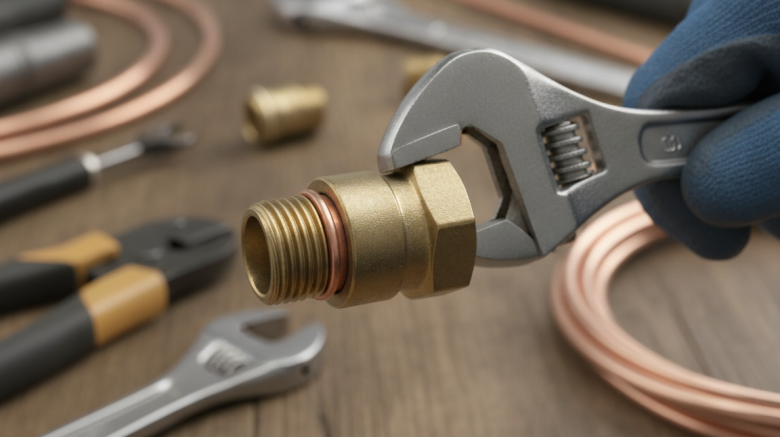
In this complete guide, Compression Adapters are covered as fittings that adapt tubing and smaller pipe runs for long-lasting plumbing work. It is designed for DIY homeowners, professional plumbers, and customers searching for the right parts at Installation Parts Supply.
Compression Adapter
A compression adapter makes its seal when the ferrule is pressed against the tubing and fitting body, locking in a secure connection. They are frequently used in home, commercial, and facility plumbing systems.
The article sets out the main types, dimensions, metal options, and recommended installation habits. It also discusses troubleshooting and where these adapters are used. It points out the importance of converting between 3/8 and 1/2 in. sizes and matching thread types such as NPT versus compression. For durability, the guide features brass choices.
Always use the manufacturer’s torque and turn specifications. For soft tubing such as PEX, use tubing inserts whenever the manufacturer or application requires them. Do not combine ferrules, nuts, or fitting bodies from different brands, because mismatched parts can create leaks, galling, or poor seating.
Essential Takeaways
- Compression adapters make seals by tightening a ferrule onto the tubing.
- Common sizes and materials for many plumbing tasks are available through Installation Parts Supply.
- Choose copper according to pressure rating, water chemistry, and the surrounding environment.
- When adapting 3/8 and 1/2 in. fittings, accurately match both size and thread type.
- Follow manufacturer torque guidance and use inserts when working with soft tubing.
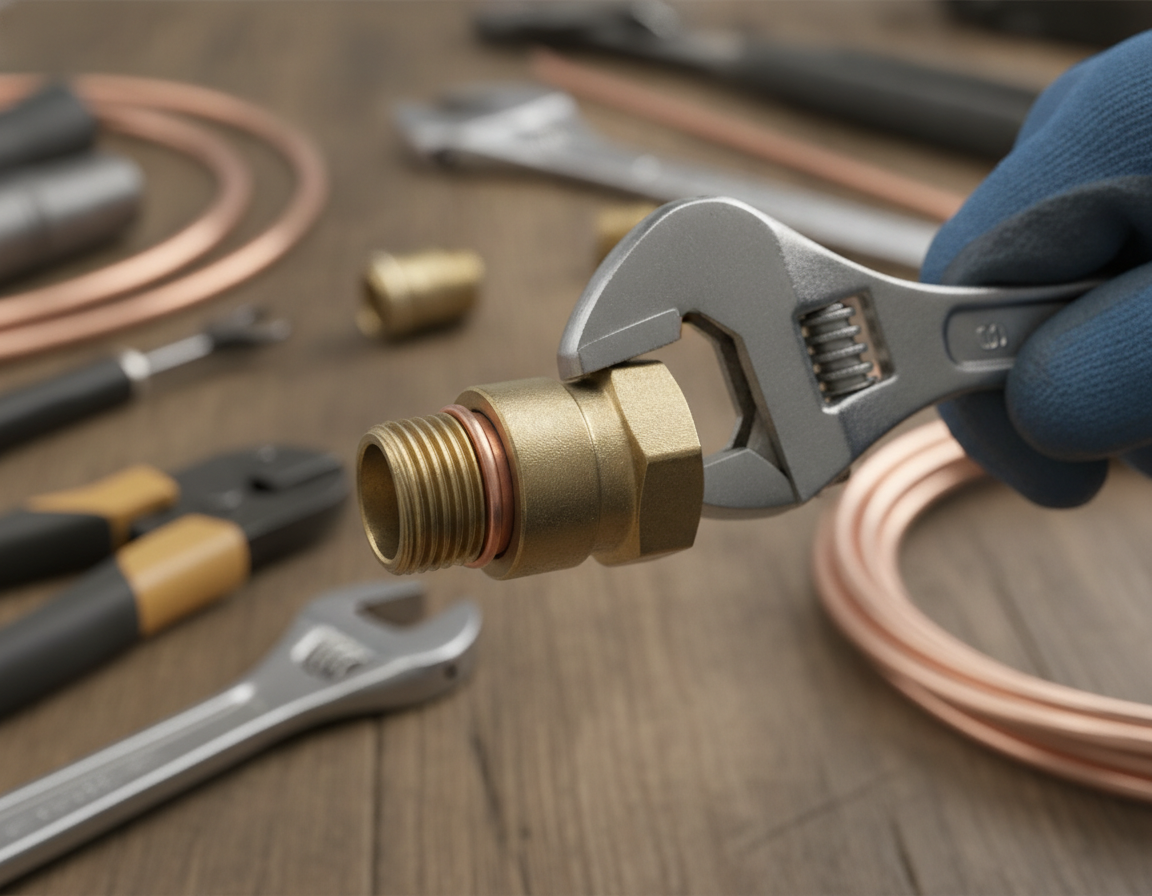
Compression Adapters And Compression Fittings Explained
A compression adapter joins tubing by physically pressing a ferrule around the tube’s outside diameter. These fittings differ from threaded connectors and push-fit types in how they create a seal. A compression adapter uses metal deformation, not thread engagement or internal grab rings.
The sections below summarize each component and how the pieces interact.
What A Compression Adapter Is And How It Differs From Other Fittings
A compression adapter is a compression-style fitting that connects tubing or pipe without welding. As the compression nut is tightened, it drives the ferrule into the tapered fitting body. That approach is unlike threaded joints, which rely on matched threads and thread sealant. It also differs from push-fit vs compression options, where push-fit uses elastomeric seals and retention clips for quick assembly.
Main Components: Nut, Ferrule Olive, And Fitting Body
The main pieces are the compression nut, the compression ferrule, and the compression fitting body. The nut creates axial force. The ferrule, also called an olive, compresses into the tubing surface. The fitting body contains a tapered bore that seats the ferrule.
Some designs use a rear ferrule to reduce stress on the seal and allow easier disassembly.
How Compression Adapters Form A Leak-Tight Seal
When the compression nut is secured, it pushes the ferrule into the taper of the fitting body. This radial compression squeezes the ferrule against the tubing and creates a line-contact seal. When the ferrule is properly seated, the joint prevents leaks under normal pressure and temperature conditions.
Compression fittings are commonly compatible with copper, brass, stainless steel, and many rigid plastic tubes. Before assembly, installers should confirm tubing compatibility and apply the maker’s torque or turn-count guidance.
| Component | Purpose | Key Benefit |
|---|---|---|
| Compression nut | Axial force to drive ferrule | Repeatable tightening and easier rework |
| Ferrule olive | Deforms to grip tubing | Metal-to-tube seal for pressure resistance |
| Compression fitting body | Receives ferrule in a tapered bore | Consistent alignment and a stable sealing surface |
| Rear ferrule when present | Separates tightening force from final seal action | Better reassembly and reduced tube damage |
Common Sizes And Type Conversions For Compression Adapters
Switching between 1/2-inch and 3/8-inch tubing is a frequent task. It is essential to select the right reducer or adapter. The right part aligns with tubing OD, thread style, and fitting gender. Choosing the correct part avoids leaks, extra fittings, and unnecessary labor.
1/2 to 3/8 adapter options
For supply-line jobs, parts such as the 1 2 To 3 8 Reducer and Half Inch To Three Eighths Adaptor are regularly used. They adapt a 1/2-inch feed to a 3/8-inch inlet. They may be found as one-piece reducers or two-piece compression adapter assemblies. This design keeps the tube seal. Always check if the listed sizes refer to tubing OD or nominal pipe size before making a purchase.
Male and female adapter and reducer combinations
Fitting gender is necessary when parts must mate correctly. When the mating component has a male thread, a 1/2 Female To 3/8 Male Adapter may be the correct choice. For the reverse arrangement, installers often use a 3/8 Female To 1/2 Male Adapter. Installers will also find 1/2 Male To 3/8 Female Adapter and 1/2 Male To 3/8 Male Adapter variations for mixed systems.
Compression seal and NPT conversion options
Parts like 1/2 Compression To 3/8 Compression adapters provide compression sealing on both ends. For threaded pipe networks, use a 1/2 Compression To 3/8 NPT or similar conversion fitting. When connecting to NPT, apply the correct thread sealant or PTFE tape to ensure a pressure-tight joint.
- Review descriptions such as 1 2 X 3 8 Compression Adapter or 3/8 X 1/2 Adapter to confirm OD versus nominal size.
- Confirm thread pitch and gender before cutting or buying replacement parts.
- Use trusted suppliers such as Mueller, Parker, or Watts to lower the risk of incompatible parts.
Material Compatibility For Reliable Compression Connections
The choice of materials significantly impacts the longevity of a joint. It is important to match the fitting material with the tubing, pressure, and fluid type. This helps create a leak-free, corrosion-resistant, and galling-free connection. For applications involving corrosive or high-purity systems, a 3 8 Male To 1 2 Female Stainless Steel option is often the most reliable.
Brass, copper, and stainless steel are the primary materials for most applications. Brass adapters generally perform reliably in potable-water and general plumbing systems. Copper fittings are appropriate for copper tubing and soldered systems. Stainless steel provides strong corrosion resistance and durability for high-pressure, chemical, or aggressive environments.
Compression fittings usually work well with rigid tubing such as copper, stainless steel, nylon, and PEEK. Flexible tubing like PEX may also be used when a correctly sized tubing insert is installed. The insert stiffens the tube wall so the ferrule can bite correctly without collapsing the tubing.
PTFE tubing offers chemical resistance and flexibility, but it can creep under compression loads. To reduce that risk, choose fittings with secondary seals, internal O-rings, or back-up support features. Regularly inspect connections when using PTFE in compressed joints.
The choice of ferrule is vital for seal reliability. Brass or stainless steel ferrules hold their shape across broad temperature ranges. Single-piece ferrules are useful for softer tubes. Two-piece ferrule systems deliver more control and can reduce galling by separating the front-ferrule and rear-ferrule functions.
Asymmetrical ferrules, with a cone-shaped profile, promote consistent seals in precision systems. They are designed to lock their orientation. Symmetrical ferrules are simple to assemble, although they may wander on some hard plastic tubing. Choose the ferrule geometry based on tubing stiffness and service demands.
When selecting materials, consider the pressure, temperature, and media involved. For high-pressure, high-purity, or aggressive fluids, stainless components and compatible ferrules are recommended. For routine domestic plumbing, a brass compression adapter or copper compression fitting provides a good mix between cost and performance.
Best Practices And Mistakes To Avoid During Installation
Effective installation begins with clean, square tubing and the correct parts. Following best practices prevents leaks, callbacks, and unnecessary rework. A simple pre-assembly checklist can reduce waste.
Preparing Pipe Ends By Cutting, Deburring, And Cleaning
Use a quality cutter to make clean, square tubing cuts. Crooked or uneven cuts can contribute to leaks. Deburring tools strip off sharp edges and metal slivers.
Wipe the tube ends with a lint-free cloth so oil, dirt, and metal dust are removed. For soft tubing like PEX, install a rigid insert sized to the tubing ID. This allows the ferrule to seat properly. These steps—cutting, deburring, and cleaning—are important for a reliable seal.
Proper Tightening: Turns Versus Torque And Avoiding Over-Tightening
After reaching finger-tight, follow the manufacturer’s recommended number of turns. Turn-count tightening often matches ferrule geometry more reliably than torque alone. Thread pitch is directly tied to how much the ferrule compresses.
Do not over-tighten, because excessive force can flatten the ferrule, widen the contact area, and cause leaks. With stainless fittings, use controlled torque to reduce galling. Only use isopropyl alcohol as a temporary assembly aid when the manufacturer allows it.
Disassembly, Reassembly, And Ferrule Replacement Limits
Most compression fittings can be disassembled a limited number of times. Ferrules often swage onto tubing after the first installation and may not reseal correctly if reused. Inspect the ferrule for deformation if you remove a fitting.
Replace ferrules showing signs of work-hardening, cracking, or poor seating. If a fitting has been assembled and disassembled several times, replace the ferrule and consider the fitting body to ensure a leak-tight joint.
Frequent errors include mixing brands, skipping inserts on soft tubing, confusing compression threads with NPT, and failing to cut, deburr, and clean correctly. Correcting these problems reduces call-backs and extends long-term system performance.
Identifying The Right Adapter: Keyword-Focused Selection Guide
Choosing the right adapter begins with precise search terms and a thorough part description review. Utilize specific phrases to find the exact match, preventing the need for returns. Common search terms include 3/8Th To 1/2 Adapter and 1 2 X 3 8 Compression Adapter for swift results.
Key details to look for in descriptions are gender, diameter, and thread type. Listings like 1/2 Female To 3/8 Male Adapter or 1 2 To 3 8 Compression Adapter help show which end accepts tubing or pipe. Ensure the diameter refers to tubing OD or nominal pipe size.
Utilizing search variants is essential when suppliers employ different naming conventions. Search for 3/8 X 1/2 Adapter, 3 8 To 1 2 Compression Adapter, and 3/8Th To 1/2 Adapter to compare compatible parts across catalogs. Suppliers like Installation Parts Supply and Grainger often list the same item under multiple labels.
Adapter orientation should match with the mating parts. A male-to-female piece, such as 1 2 Male To 3 8 Female Adapter, is useful for connecting a rigid run to a hose or supply line. Female-to-female adapters, on the other hand, join two male-threaded components.
Be cautious of hybrid fittings that combine different thread types. A 1/2 Compression To 3/8 NPT or 1/2 Female Compression To 1/2 Male NPT fitting places a compression connection on one end and pipe thread on the other. Use thread sealant only as recommended by the manufacturer.
Material selection is important for corrosion resistance and compatibility. Brass and stainless steel are widely used choices. Ensure compatibility with copper, PEX, or PTFE tubing to avoid galvanic corrosion when mixing metals.
In cases of uncertainty, verify part numbers and examine photos. Incorporating keywords like 3/8Th To 1/2 Adapter, 1 2 X 3 8 Compression Adapter, 1/2 Female To 3/8 Male Adapter, 1 2 To 3 8 Compression Adapter, 3 8 To 1 2 Compression Adapter, and 3/8 X 1/2 Adapter in searches can expedite the process of finding the correct match.
Troubleshooting Leaks And Performance Issues
Leaks and pressure loss in compression connections require a swift, systematic approach. Start with a visual inspection, then use simple checks to narrow down the problem. When working on live systems, always prioritize safety.
Common Causes To Diagnose
First, inspect the ferrule for uneven marks or gaps. Check for damaged or cross-threaded nuts. Ensure the tubing is cut square and fully inserted. Make sure the adapter type fits the system so thread mismatches are avoided.
Diagnostic Checks To Follow
- Look closely to confirm the ferrule is seated and the nut is properly engaged.
- Turn the nut slightly and feel for smooth engagement; roughness can point to thread damage.
- Measure the tubing diameter and inspect for roughness, flattening, or ovality that may stop a proper seal.
- Pressure-test the connection at low pressure before returning to service.
Practical Fixes
If a joint appears loose, retighten to the recommended specification. Avoid over-tightening, which can deform the ferrule.
For swaged, scored, or distorted ferrules, replace them along with the nut and fitting body if necessary. Avoid mixing ferrules and fitting bodies from different manufacturers because mismatched taper, length, or geometry can compromise the seal.
For soft tubing, fit an internal tubing insert sized to the pipe to stabilize the wall and improve sealing. Where corrosion is a concern, stainless steel fittings can extend service life.
Addressing PTFE Creep And Cold-Flow
Preventing PTFE cold flow depends on specific sealing strategies. Choose fittings with internal O-rings, redundant seals, or mechanically supported ferrule designs that control creep.
Plan periodic inspections because cold flow may develop over time, even after the fitting was installed correctly. If PTFE shows deformation, replace the tubing and consider switching to a backup sealing method.
| Problem | Fast Check | Suggested Fix |
|---|---|---|
| Leak at compression nut | Check for loose nut or poor ferrule seating | Retighten carefully and replace ferrule if needed |
| Leak appears only under pressure | Inspect tube shape and ferrule alignment | Re-cut tubing, support tube wall, and fit a new ferrule |
| Gradual seepage | Check for soft tube deformation or PTFE creep | Add secondary sealing or change to reinforced tubing |
| Rough thread engagement | Nut feels rough while tightening | Replace damaged nut or body and tighten new parts to specification |
| Corrosion or material failure | Look for corrosion marks or surface damage | Change to stainless fittings and compatible ferrules |
Application Considerations And Use Cases
Compression adapters are essential for various tasks around the home. They are used to join supply tubing to fixture inlets. For example, a sink supply line adapter may be needed when faucet inlets and sink supply posts use different sizes.
Home installations often involve sink and faucet supply lines, toilet connections, and appliance hookups. A water heater compression adapter is valuable for replacing an old tank or connecting a new valve. Choose parts rated for household water pressure and make sure the ferrule material works with the tubing.
In commercial and industrial settings, the requirements are more stringent. High-pressure compression fittings are used in process lines, bottled gas systems, and HVAC. For demanding applications, stainless ferrules and two-piece ferrule designs can handle creep, corrosion, and vibration.
Instrumentation and high-purity systems need fittings that limit contamination, out-gassing, and unwanted residue. Select materials compatible with sterilization conditions and clean-room environments. Ensure the pressure ratings and traceability are met when selecting components for lab or medical equipment.
Combining parts from different manufacturers can create sealing problems. Small differences in ferrule taper, thread pitch, or ferrule length can prevent the seal. It is best to purchase fittings and ferrules from the same vendor or confirm compatibility through Installation Parts Supply or the manufacturer’s data.
When sourcing parts, carefully check product pages for exact outer diameter, thread pitch, and material. That step reduces surprises in the field. Proper selection is key to preventing leaks and extending the service life of both residential and commercial installations.
Conclusion
Compression adapters can adapt tubing when the correct part is selected and installed properly. Knowing the main parts—nut, ferrule, and body—makes selection and installation safer. This knowledge helps in matching sizes, genders, and thread types, such as a 3/8 to 1/2 converter or a 1/2 female to 3/8 male adapter.
Adapter material is another important selection factor. Brass and stainless steel are often chosen for high-pressure, corrosive, or harsh chemical environments. Copper is often suitable for many household and residential plumbing applications.
Follow best-practice installation methods. Ensure square cuts and deburr the tubing. Install inserts when working with soft PEX, nylon, or similar flexible tubing. Tighten according to the recommended turn count and avoid excessive force.
For troubleshooting, check ferrule seating and thread integrity. After disassembly, replace ferrules that are deformed. For PTFE applications, consider redundant seals, backup sealing methods, or alternative materials to control cold-flow.
When purchasing parts, rely on trusted suppliers and detailed specifications. Installation Parts Supply recommendations can help confirm compatibility. They provide a wide selection of adapters, reducers, and conversion fittings. The right parts, combined with correct installation, can reduce leaks and improve overall system reliability.